
18 Jun 2026
Disinformation can confuse and overwhelm
Disinformation is the scourge of our times. Often maliciously spread, it furthers the agenda of those who want to cast doubt, sow division and weaken community cohesion at a systemic level.
By undermining the need for urgent climate action, it can reverse the policies aiming to build resilience and weaken the connections that underpin everyday life. And the rise of AI is making disinformation easier to produce and spread.
We’ve just run a pilot project to explore how disinformation operates in hyper-local settings and what we could learn about operating in the disinformation minefield, where trust is scarce and people increasingly rely on friends and family to navigate complex and disputed issues.
We wanted to find out if this was having a chilling effect on the ability of climate activists to confidently promote climate solutions within their community. During election cycles when misleading narratives about climate change tend to increase, understanding how to counter disinformation becomes ever more critical. And we realised that disinformation is a major issue and reacting to it comes at an emotional cost.
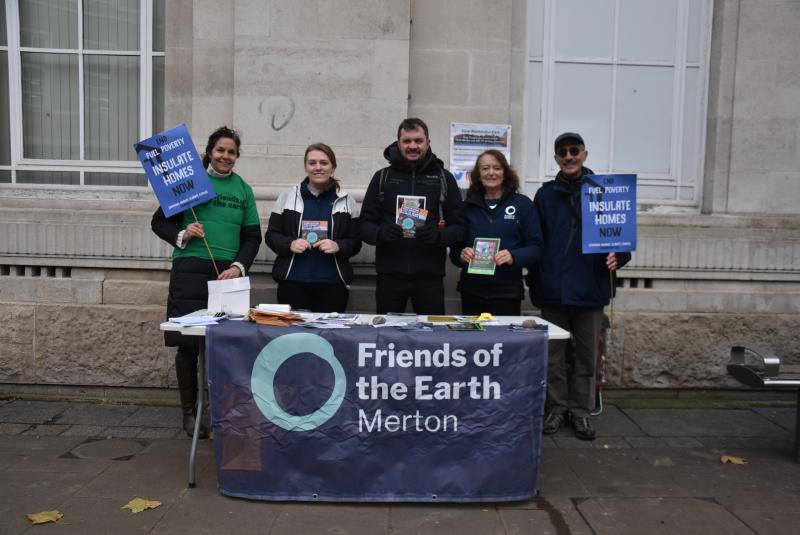
Disinformation is increasingly acting as a barrier at the local level. Directly affecting grassroots climate action, stiffening resistance to traffic reduction schemes, community energy projects, or heat pumps for example. As these local initiatives collectively make a significant impact, overcoming barriers at this level is crucial.
The context
A recent study by The Social Market Foundation (SMF) analysed more than 125,000 posts on local Facebook and Nextdoor groups, and on X searches. it revealed that a fifth of all fake news posts in Facebook posts related to local issues (local services, transport, planning decisions etc). Misinformation rose around local elections and grew in the lead up to polling day.
Some of this maybe down to honest misunderstanding, lack of knowledge or error. More concerning is the spread of disinformation - the presentation of partial or false information with the deliberate intention of misleading.
Harriet Kingaby, our partner in the project, describes the context for our pilot:
“There are strong financial and political incentives for resisting climate action. These include shifts in energy systems, transport, and housing. At the same time, cultural and political opportunism is increasing.
On one side, we have a surge of disinformation. On the other, there is often silence — from corporations, governments, and public figures who are not actively shaping positive narratives. This creates a vacuum that disinformation fills. Narratives like “net zero will make you poorer” or “it takes away freedom” are gaining traction.
We are at a tipping point. Unless we empower trusted local voices to engage effectively, the problem will worsen”.
Harriet also observed that organised disinformation groups can be very powerful in local contexts. As their influence can be significant in community organising, it’s essential to help people navigate disinformation, particularly as contentious issues continue to emerge.
Three month learning programme with grassroots activists
While there are many resources for organisations operating at a national level, there is less support for individuals dealing with disinformation in spaces like WhatsApp groups, neighbourhood Facebook pages, or informal community settings. We wanted to work with a grassroots cohort because it allowed us to learn from real experiences while testing whether these approaches resonate at a local level.
We recruited 18 community-based activists – between 8 and 12 joined our training sessions each time. About half were from Friends of the Earth, and the rest were from aligned movements such as the Mothers Climate Action Network. Over three months we ran three sessions spaced a month apart. The journey included:
- Understanding today’s disinformation environment
- Exploring available responses
- Reflecting on their experiences after applying those approaches in real life
Participants were encouraged to test strategies between sessions and bring learning back to the group. As building agency is so important, we took a peer-learning approach, inspired in part by our past work with peer-learning specialists Huddlecraft. Their approach emphasises the power of the group — building relationships, creating a safe space to experiment, and fostering accountability. Participants commit to contributing and sharing experiences, which encourages action.
Our key takeaways
First: empathy.
Understanding why people believe in conspiracy theories or misleading narratives is essential. This allows for better engagement, finding common ground and setting boundaries.
Second: remember the real audience.
The opposition is usually not the audience. The real audience are the “persuadables” — people observing the conversation who are undecided. That shift in perspective is crucial.
Third: get ahead of the story.
We shouldn’t only respond to disinformation. Proactively sharing positive, trustworthy content can reduce the likelihood of people believing false information (also known as ‘pre-bunking’.
Additionally, when responding, people should consider:
- When it is safe to engage.
- Whether the response will reach persuadables.
- When to stop engaging - people struggle to step away from arguments and not have the last word.
Knowing when to stop is particularly important for conserving energy and avoiding unproductive exchanges. Continuing to engage can also result in algorithms promoting the ‘debate’, giving more airtime to the opposition.
The importance of recognising the personal dimension
Unlike engaging in a national online discussion, navigating disinformation in the hyperlocal context often has a tricky emotional and very personal aspect.
As Harriet observes
“Participants often had close relationships with people who held opposing views. This created tension and, in some cases, a sense of loss or grief.
That emotional context makes it harder to adopt strategies like focusing on persuadables, because there is a strong desire to change the minds of people we care about”.
This also has an impact across different generations. Many older people are more vulnerable to misleading information due to rapid changes in the media landscape. This adds another layer of complexity and emotional weight.
Keeping safe
The point about safety is critical. Engaging with disinformation comes with risks like online abuse and ‘doxing’ (the act of revealing personal information about someone online without their consent, with the intent to threaten or intimidate). People need strategies to protect themselves, especially in hyper-local contexts where interactions may involve people they know and offline and online conversations are increasingly connected.
Credibility of the individual
Another important insight is that trusted local individuals have a unique advantage. Their credibility comes from real relationships within the community — something large-scale actors cannot replicate.
We also noted that many people observing discussions remain silent but are still influenced by what they see. This reinforces the importance of talking to persuadables – the silent majority of bystanders.
What impact did this approach have?
There were practical impacts — for example, participants felt more confident running public events, anticipating challenges, and engaging effectively. One participant said
I’m no longer avoiding online comments as I used to and I’m proactively identifying the people that can be persuaded versus those who are stuck in their ways.
After the pilot, participants felt more prepared. They learned to recognise patterns and navigate conversations with greater confidence, while still being authentic.
What were the benefits of the cohort approach?
It was powerful because everyone was in a learning space.
Unlike traditional training, where information is delivered from expert to participant, this format allowed people to reflect, share experiences, and process ideas together.
Holding space for reflection was particularly important. Participants were able to work things out in real time and learn from each other. Some documented their experiences and brought practical examples back to the group, which inspired others to try similar approaches. We also use a ‘padlet’ – an online learning space – as virtual scrapbook, so people could share screenshots of examples and how they had responded.
It felt less like instruction and more like collective exploration, which encouraged deeper engagement and real-world application.
As one participant explained
What I liked were explanations of what's behind misinformation; the clear and helpful suggestions for responses; hearing about the experiences of other people, and spending time with people who share the experience of feeling overwhelmed and confused by so much misinformation. All of this has helped build my confidence to address challenges without being too combative.
What will we do next?
We found it instructive that the SMF study confirmed our hunch about the importance of hyper local or closed digital spaces in combatting disinformation and continuing a focus on these will be important.
We plan to develop wider training resources, create practical tools like checklists and integrate learnings into existing materials. Friends of the Earth has also published a set of ‘Fact checkers’ which provide helpful background for rebuttals to the inaccurate and misleading claims of some politicians.
However perhaps our most important takeaway is that at the hyper-local level, disinformation is experienced socially and emotionally. There can be more at stake than online credibility. Local messengers can be exposed to risk and require support structures, not just briefing materials. Communications strategies must consider activist resilience and provide practical support to help them maintain confidence, safety and wellbeing while navigating contested climate conversations.
The last word is from one of our participants:
I would like to thank everyone involved for putting this together. It has been so helpful, and I hope that you can encourage more people to take part. I imagine that it could grow into a really valuable resource, updated regularly, sharing examples and techniques, and providing support for our shared experience.
The pilot was developed by Mary Stevens of Friends of the Earth’s Experiments Team and Harriet Kingaby. Harriet’s background is in sustainability and climate communications, her work has focused on what the United Nations calls “information integrity,” looking at how we can improve the health of the information environment. She also works with the United Nations on trends in information systems and incentives behind the production and distribution of information.
Video
This article is based on extracts from a live conversation between Mary and Harriet. In it they discuss insights from the three-month peer learning programme, covering everything from information integrity and trust to practical strategies for engaging in difficult conversations. If you would like to see the video of the whole conversation, click here.