
The problem

Most AI development happens far from the communities it impacts. Tools are built by tech companies, narratives shaped by those with power. Ordinary people, especially those already marginalised, are often left out of the conversation. For a campaigning organisation rooted in community action, this isn’t just an abstract concern. If AI is going to shape how we live, organise and protect the environment, communities need to be part of shaping it.

The challenge

What happens when you put AI tools directly into the hands of activists and community groups? We wanted to find out by creating spaces where they could explore, question and build things for themselves. Could grassroots experimentation shift both what AI is used for and who gets to use it? 

What we did

We launched a Community AI Lab: a free, hands-on programme where participants spent several months exploring how AI could support local environmental action. From prototyping a hyper-local food surplus redistribution app in North London, to building nature-sensing robots that help people experience their neighbourhood through non-human senses, to designing workshops that help volunteers visualise the impact of their work -  each participant designed and tested their own idea with real communities. 

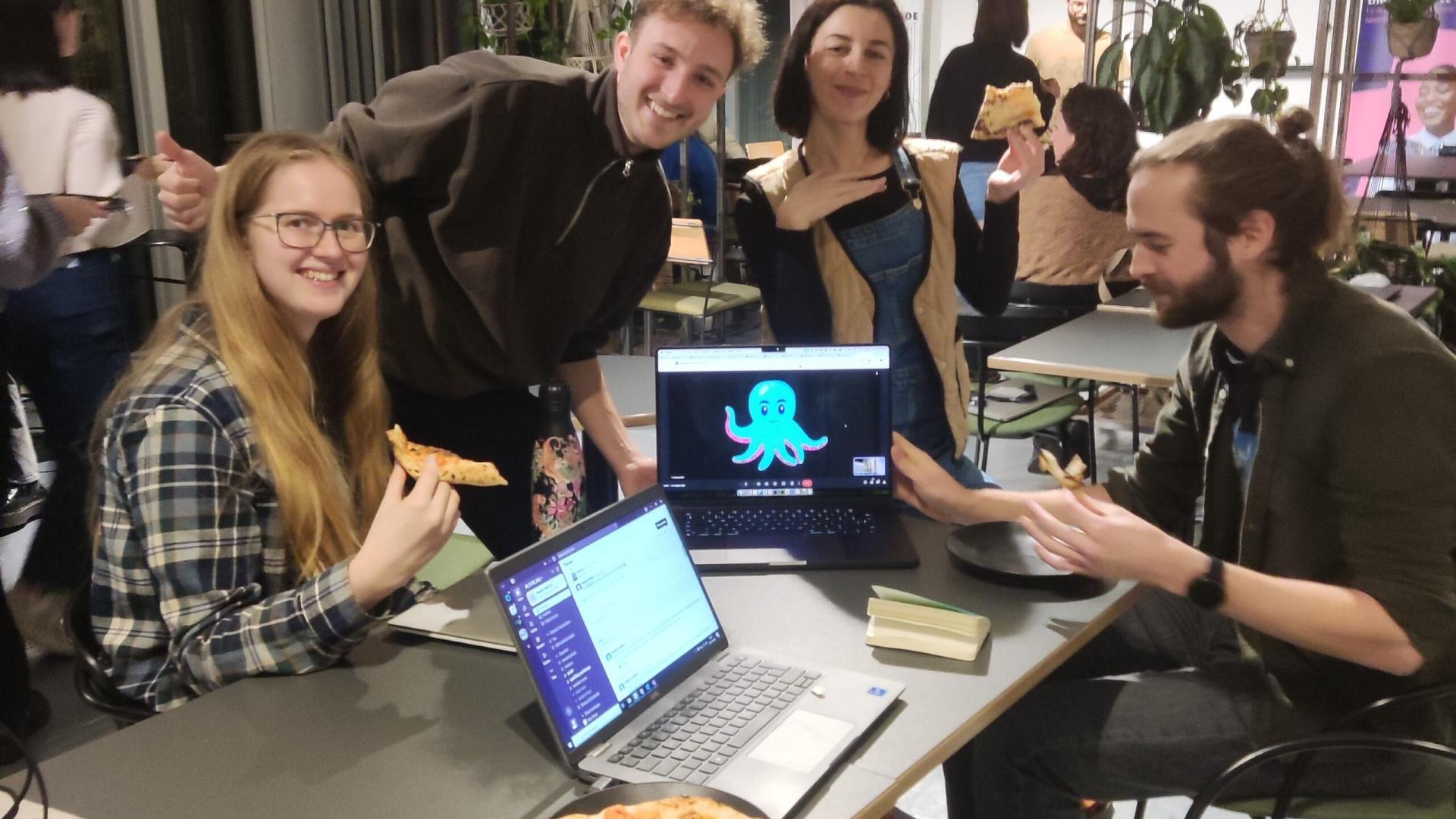
Later we partnered with 42 London on an AI buildathon, where a team built OctopAI — an empathetic AI assistant designed to support group facilitators in our Money Movers climate finance programme, offering real-time coaching prompts and sentiment analysis while staying deliberately in the background.

And we’re now working with Electric Sheep on an AI for Climate Action Lab pilot, testing whether a structured learning–making–reflection pipeline can increase activist agency and creativity with AI tools. 


What we learned

People don’t need to be technical to engage meaningfully with AI. Our lab participants brought design skills, community knowledge, and lived experience  and consistently found practical applications that technologists had missed. The best ideas came from people closest to the problems.

We also learned that framing matters enormously. When AI is presented as a tool for community power rather than a threat to be managed, people engage differently - with curiosity rather than anxiety.One participant put it simply: “AI is just another tool, but we mustn’t forget the humans in the middle of it.” 

What's next?

Our AI for Climate Action Lab pilot with Electric Sheep is in development now. This will test AI-assisted creative tools with around 20 activists across England, Wales and Northern Ireland. 

We’re also exploring how to scale the lab model and connect it to our wider work on AI narratives and policy. 


If you’re a community group, activist, or organisation interested in exploring AI on your own terms, we’d love to hear from you.